


Paddle Through Paradise: SUP on Lake Klivnik & Lake Mola, Slovenia

Stand-up paddleboarding guide · Near Ilirska Bistrica, Primorska
There are places in Slovenia that feel like a secret kept between the forest and the water. Lake Klivnik and Lake Mola are exactly that — twin gems cradled in the folds of the Javorniki hills, just minutes apart, where the trees stand so dense and the surface lies so still that paddling across them feels less like sport and more like trespass into another world.
Located just outside Ilirska Bistrica in the Primorska region, these two reservoir lakes sit at the edge of the vast Snežnik forest — one of the largest contiguous old-growth woodlands in central Europe. Most tourists follow the coast or rush to Bled. Here, you get the quiet Slovenia keeps for itself.

Two Lakes, One Extraordinary Morning
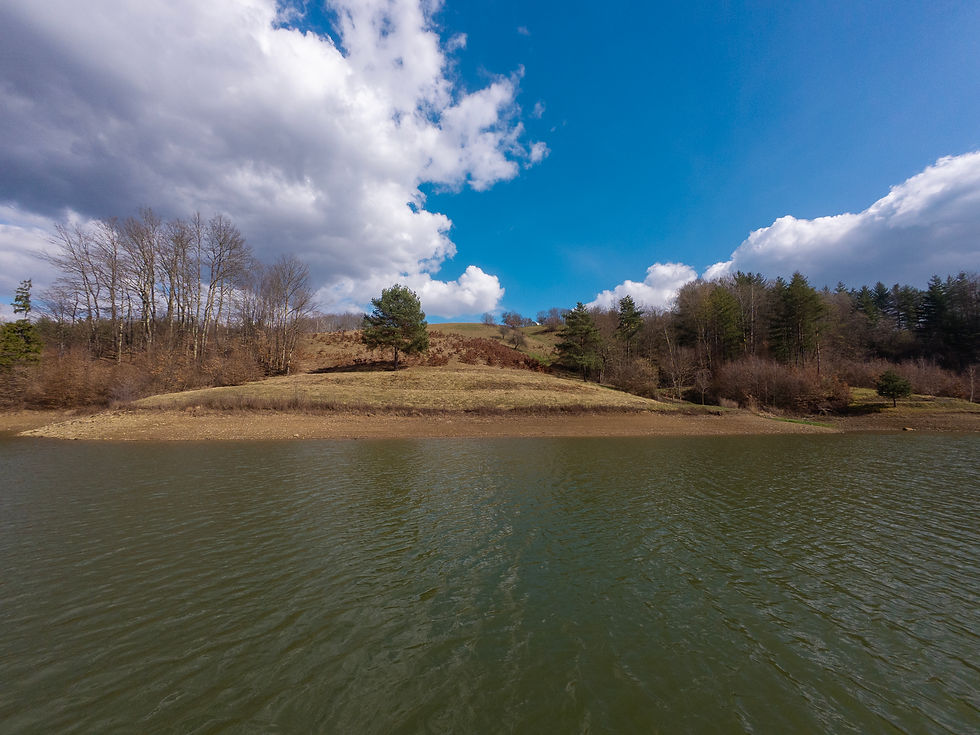
Klivnik and Mola are artificial reservoirs, built to regulate the flow of the River Reka, protect the surrounding land from high water, and serve as fish accumulation reservoirs — but nature long ago erased any sense of the industrial. Ringed by silver fir, beech and spruce, they carry the mood of something ancient and earned.
The two lakes are connected by a short forest path — roughly ten minutes on foot, or a brief drive. Together they form a natural SUP loop: launch from one, paddle its full perimeter, hike to the other, and paddle back. You could fill an entire day without once wanting for more.
What the Paddling Is Actually Like
Lake Klivnik — into the forest silence

Klivnik rewards those who arrive early. The water surface is protected on all sides by the treeline, which means wind — the enemy of beginner SUP — barely registers here. You can stroke from one end to the other in perfect stillness, watching the reflections of the trees pile up beneath your board like a second forest growing downward.
The shoreline is irregular and interesting: small inlets invite exploration, submerged logs catch the light, and the occasional heron stands sentry at the water's edge, unimpressed by your presence. Circumnavigating the lake takes most paddlers around 45 minutes to an hour at a relaxed pace — long enough to properly settle into the rhythm.
In calm conditions, the reflections on Klivnik are near-perfect mirrors. Bring a waterproof camera or mount one on your board — the photos you'll get at sunrise are genuinely extraordinary.
Lake Mola — space to breathe and explore
Mola has a slightly more open character, with longer uninterrupted stretches of water that give you room to work on your paddling technique or simply let the board drift and look up at the sky. The surrounding landscape softens here — the forest fringe gives way in places to grassy banks where you can beach the board, take a swim, and watch the clouds move overhead.
On warm summer days, local families picnic along the shore, but the lake is large enough that you never feel crowded on the water. Pick a quiet cove on the far bank and you might have it entirely to yourself.

Plan Your Visit
When to go
The sweet spot is late spring through early autumn — May through September. Early mornings in July and August offer glassy-flat water and mist, while autumn brings extraordinary colour to the surrounding beech forests, turning the reflections amber and copper. Spring is ideal for those who like cool water and genuine solitude.
Getting there
Head to Ilirska Bistrica, a small town in the Primorska region of southern Slovenia — roughly 70 km from Ljubljana and 60 km from Rijeka, Croatia. From there, head towards Klivnik (about 4 km west) trough Dobro Polje and Harije villages. In the village named Zalci turn right; the road winds up through the forest until the reservoir comes into view. Lake Mola lies a kilometer south-east of lake Klivnik, best accessible on the eastern bank at Ribiška družina Bistrica complex in village Soze . Both are accessible by car, with small informal parking areas at each lake. A marked forest trail also connects the two if you'd prefer to walk between them.

Tips for your day on the water
Arrive early. Dawn and early morning bring mirror-calm conditions and mist. By 10am the surface can show wind ripple, especially on the more open Mola. There are no equipment rental shops at either lake, so bring everything you need — board, paddle, water, food, and a wetsuit or rash vest if you're planning a longer session, as the water stays cool even in summer thanks to forest shading.
These are clean water reservoirs, so treat them with real respect: no sunscreen in the water, no detergents, no waste left behind. If you can, budget time for both lakes — they have entirely different personalities, and paddling one without the other feels like leaving a sentence half-finished.
The Slovenia That Isn't on the Postcard
Bled is stunning. Bohinj is magnificent. But there's a particular joy in discovering the places that haven't yet been polished for an audience — where the infrastructure is minimal, the signage is in Slovenian only, and the experience is yours to invent.

Klivnik and Mola are that kind of place. They attract local walkers, the occasional angler, and families from Ilirska Bistrica on warm weekends. They are not set up for tourism in any meaningful sense, and that is entirely the point.
Paddling here isn't about performance. It's about two hours in the middle of an ancient forest, on water so clean and still it seems almost philosophical — the kind of morning you'll be describing to someone six months from now, unprompted, and surprising yourself with how clearly you still remember the sound of nothing at all.
Pack the board, fill the flask, set the alarm early. The forest road is quiet at 6am, and the lake is all yours.

Comments